Four questions to look at your team through the axes that shape its decisions and its culture.
Our own model
Team Neurodynamics
It brings together research in behavioral economics and hands-on experience working with teams. Its four axes converge in decision-making, the dimension that integrates them, and they are the foundation of my upcoming book.
Choose an axis and think about it with your team in mind.
Motivation What drives us forward?
A team’s motivation isn’t just about enthusiasm: it has to do with the meaning its members find in their work and with what they feel they can achieve together.
Questions to think about your team
Does your team know why it does what it does?
What was the last thing you celebrated together?
Which tasks excite them, and which do they do only because they have to?
To observe this week: Which conversations light the team up, and which ones shut it down.
Adaptation How do we respond to pressure and change?
When change comes, every team has a habitual way of reacting: speeding up, resisting, waiting for instructions or trying something new. Recognizing it is the first step toward choosing a different one.
Questions to think about your team
How did your team react to the most recent change?
What do they do when the plan stops working?
Do they dare to try something different, even if it might not work out?
To observe this week: What happens in the team when unexpected news arrives.
Wellbeing How do we look after our energy?
A team’s wellbeing is built day to day: in its work rhythms, in its breaks and in how people talk about being tired.
Questions to think about your team
How does your team get to the end of the week?
Can someone say “I can’t take this on” without it being read as a lack of commitment?
What recharges their energy, and what drains it?
To observe this week: When the team works with the most energy.
Connection What do we need to trust each other?
Trust shows in what a team dares to say: a question, a disagreement, a mistake.
Questions to think about your team
Do the people on your team feel free to say they don’t know something?
Are disagreements discussed in the meeting, or afterwards, in the hallway?
What do they know about one another beyond the task at hand?
To observe this week: Who speaks up and who stays quiet in meetings.
What happens in a team rarely has a single cause. That’s why we combine four disciplines with artificial intelligence and design the path together with you, based on what your team needs.
Organizational psychology
Relationships, roles and culture
Focus The dynamics between people, roles and organizational context: relationships, how responsibilities are distributed, culture and psychological safety, understood as the freedom to speak up, ask questions or make mistakes without fear of negative consequences.
Contribution A systemic reading before any intervention, one that distinguishes the individual from the group and the organizational, and creates the conditions for the team to address what really matters.
Organizational coaching
Conversations and agreements
Focus The conversations and commitments that sustain team coordination: the quality of listening, the clarity of requests and the follow-through on agreements.
Contribution Turning reflection into action through concrete agreements, clear ownership and follow-up.
Applied neuroscience
Energy, stress and learning
Focus The impact of stress, motivation and the perception of threat or safety on attention, learning and collaboration.
Contribution Learning experiences designed around how people process pressure and change, which sustain the team’s energy and help new habits take hold.
Behavioral economics
Decisions and habits
Focus The heuristics and cognitive biases that shape individual and collective decisions, such as status quo bias, group conformity or the anchoring effect.
Contribution More conscious decision-making processes and work environments designed to make behavior change easier and to sustain it over time.
AIArtificial intelligence · PatuCoach AI
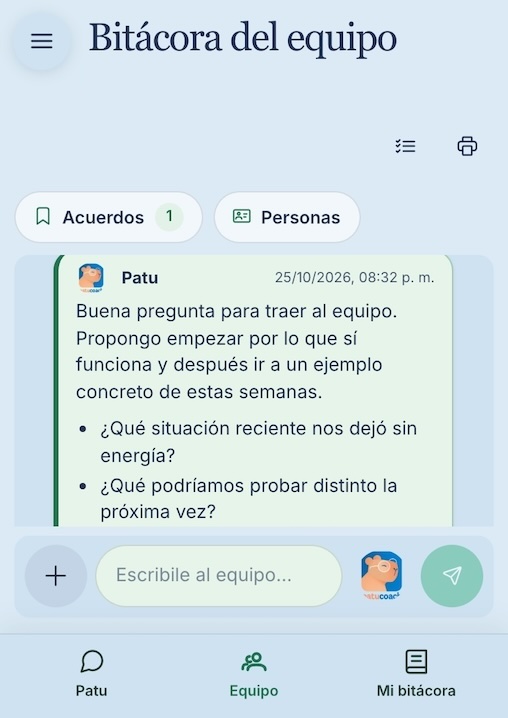
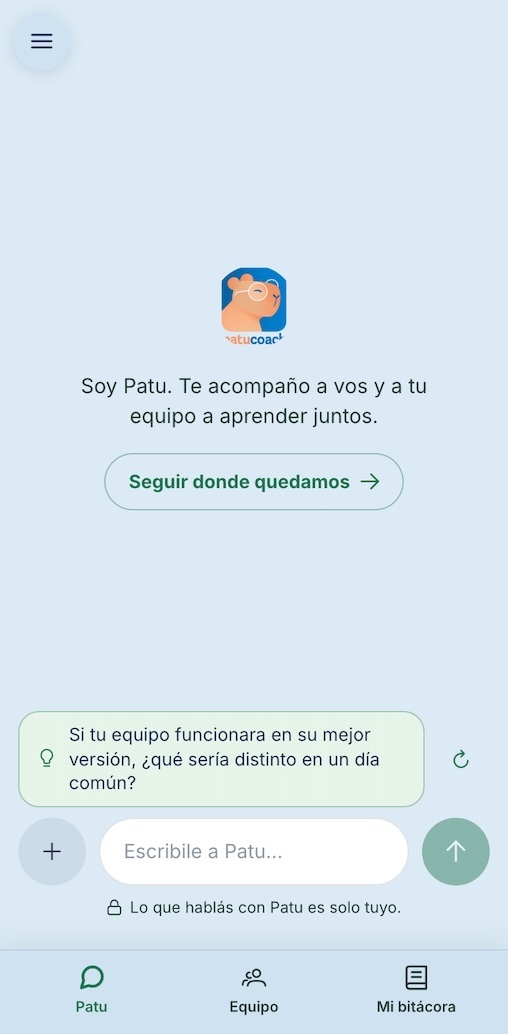
An agent specialized in team development that sustains the work between sessions: it talks privately with each person and supports the team in its group chat.
We’ve all seen it: a session that sparks enthusiasm and, a few weeks later, routine takes over again. That’s why the program combines sessions with Patu, our artificial intelligence agent, who supports each person in between.
Before
We map objectives and context, and run an anonymous pulse survey on the four axes of Team Neurodynamics to build an initial diagnosis.
During
Sessions with activities and conversations about real situations. Patu takes part as a learning partner, a reflective partner and a member of the group.
After
Patu sustains practice day to day and helps you see how the team evolves.
For leaders, for teams, or both
For leaders
Leadership development
Ideal when decisions are concentrated at the top and it’s hard to delegate, prioritize or give autonomy.
Self-awareness and leadership impact
Clear priorities and expectations
Feedback and difficult conversations
Motivation, autonomy and delegation
Pressure, stress and ways of learning
Outcome Sharper judgment for decision-making and new leadership practices applied day to day.
For teams
Team development
Ideal when the team is growing, needs to coordinate better or has conversations it keeps putting off.
Trust and psychological safety
Listening and shared responsibility
Biases and collective decisions
Agreements and cross-team coordination
Outcome A shared view of how the team works and sustainable working agreements.
Team days, talks, workshops and executive sessions. In person or online, always tailored.
A starting point
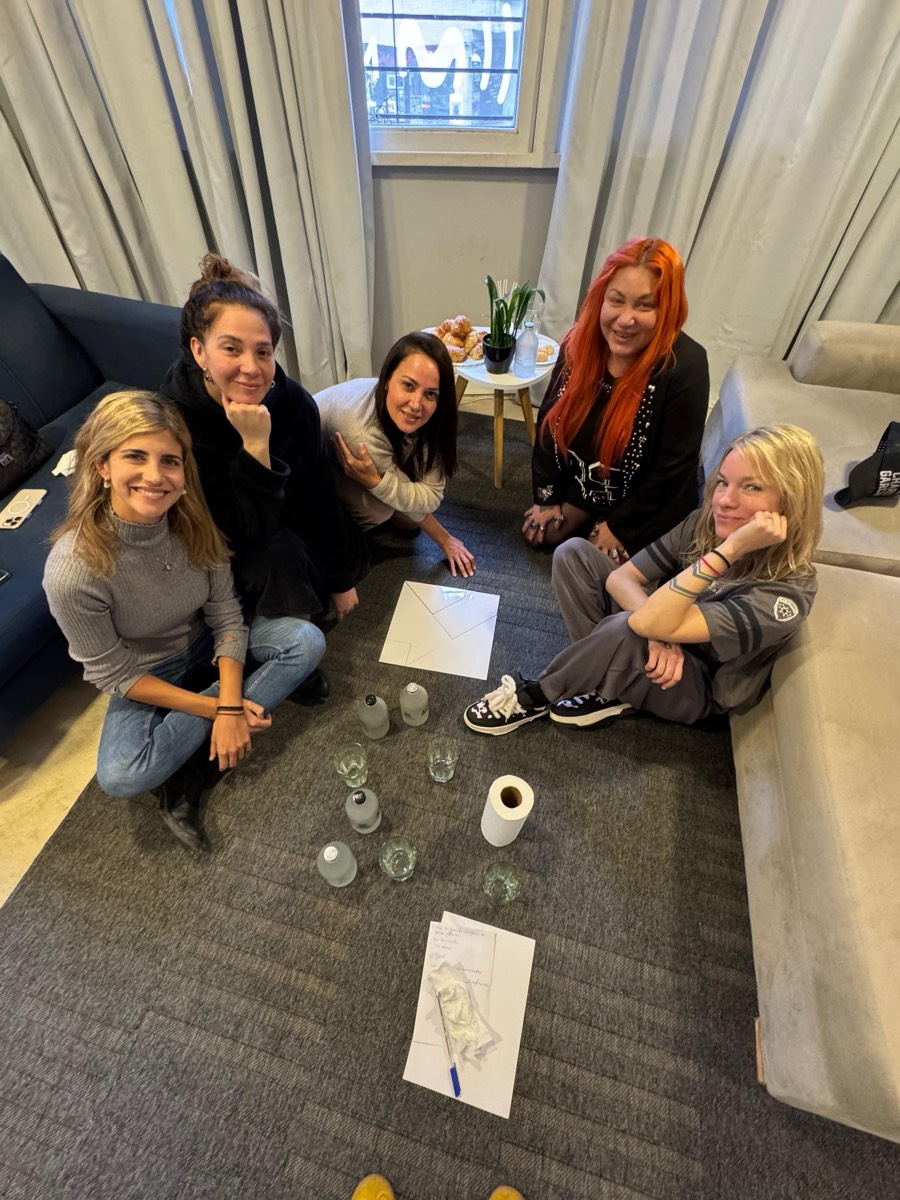
Team connection days
Ideal when the team needs to reconnect.
A day away from the routine for the team to see itself differently and agree on the way forward.
Activities
Collaborative challenges
World Café
Team identity
Recognition
Speaker
Talks
Ideal when you want to put a topic on the agenda at an event or internal meeting.
Talks with clear concepts, everyday examples and questions that connect with each audience’s reality.
Topics
Belonging and connection
Conversations and agreements
Decisions and change
Leadership and human dynamics
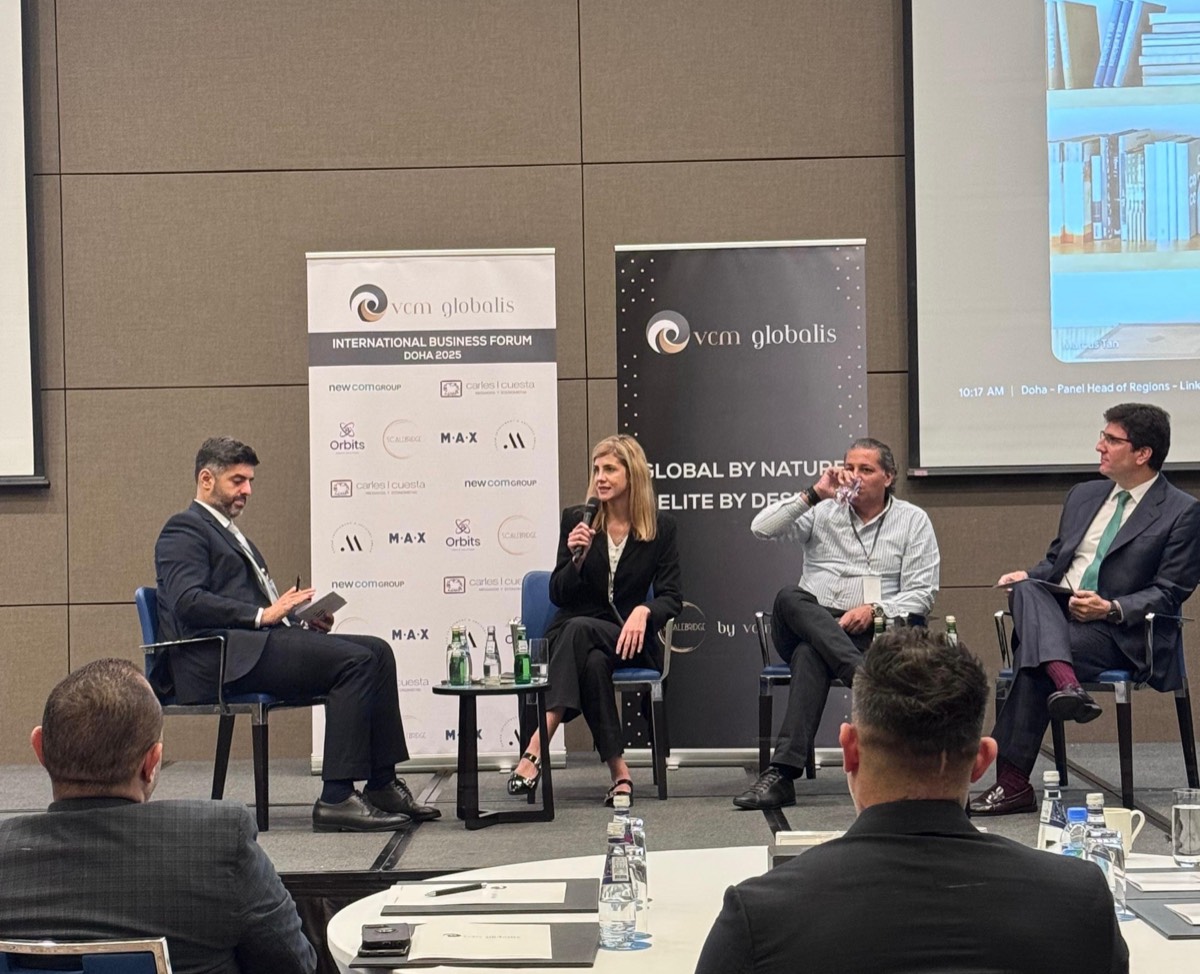
VCM Globalis International Business Forum · Doha, 2025
A specific topic
Tailored workshops
Ideal when the team needs to work on a specific topic.
A hands-on session built around everyday cases. It can stand alone or be part of the program.
Possible topics
Feedback and difficult conversations
Psychological safety and trust
Cross-team coordination and agreements
Biases in team decisions
Stress, energy and wellbeing
Delegation and autonomy
Leading the organization
Executive sessions
Ideal when partners, owners or leaders face key leadership decisions.
One-on-one sessions or sessions with the leadership team, to think things through with an outside perspective before deciding.
Possible topics
Strategic and leadership decisions
Leadership role, style and impact
Leadership team alignment
Critical conversations
Growth, succession and new roles
Managing pressure
Founder
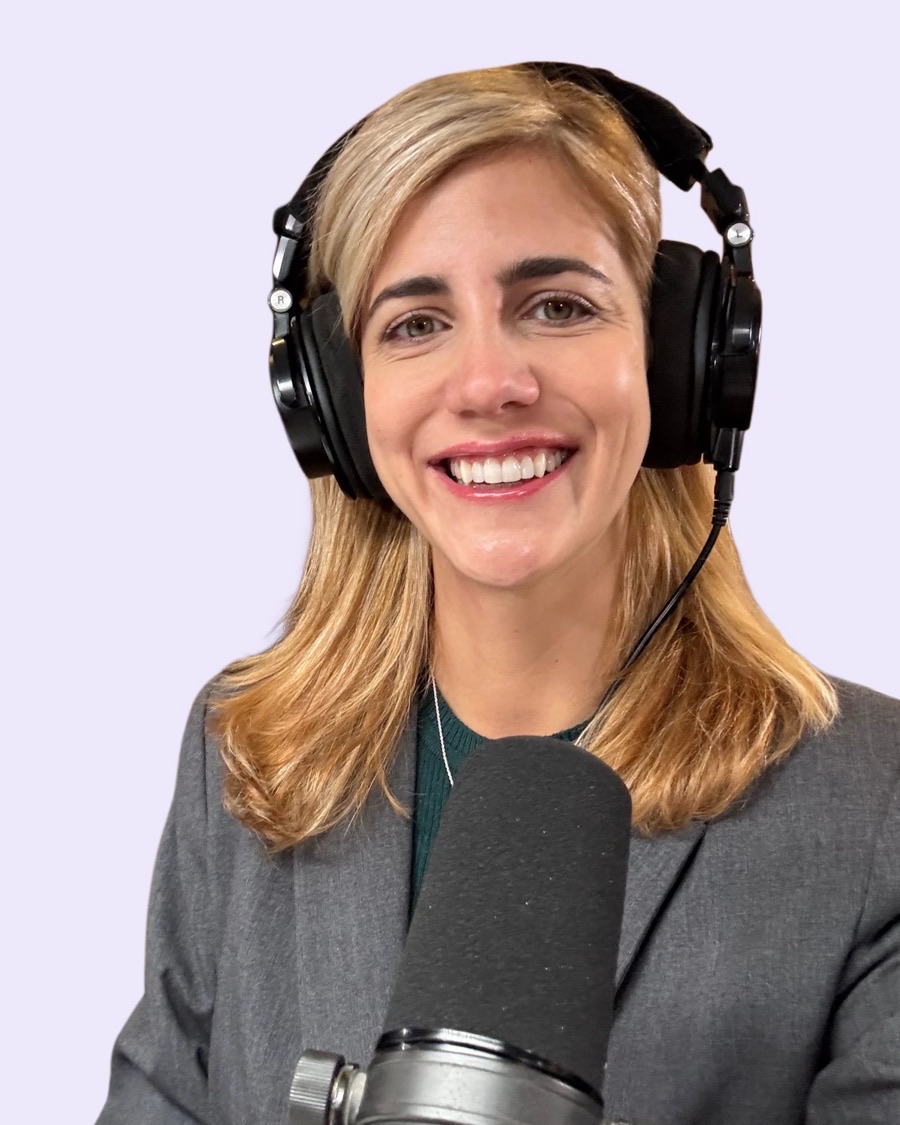
Agustina Yasielski
Psychologist, organizational coach and speaker
From Orbits to Equipos en órbitaEquipos en órbita continues the work of Orbits People Solutions, a consultancy specialized in leadership, team development, talent and organizational culture.
Interdisciplinary teamI work with professionals from different disciplines who join each project based on what the organization needs.
Over 10 years of corporate experienceI led teams and organizational development projects at companies across different industries.
University lecturer at UNSAM and USALTeaching coaching, leadership and team development.